
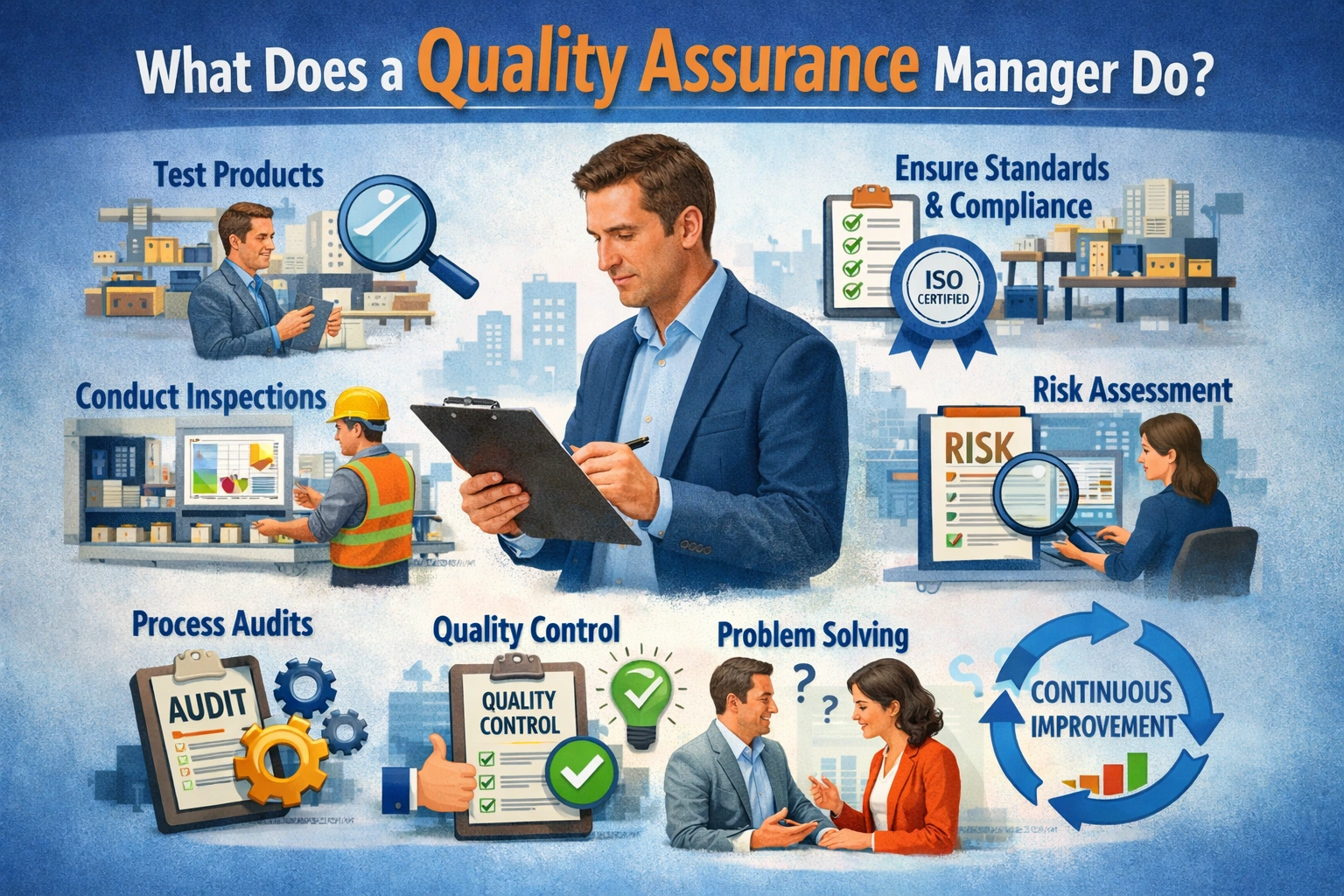
In today’s competitive business environment, delivering high-quality products and services is essential for success. This responsibility largely falls on the shoulders of the Quality Assurance (QA) Manager. A Quality Assurance Manager plays a critical role in ensuring that products, services, and processes meet established standards, customer expectations, and regulatory requirements. This article explores what a Quality Assurance Manager does, their key responsibilities, skills required, and why the role is so important.
Understanding the Role of a Quality Assurance Manager
A Quality Assurance Manager is responsible for developing, implementing, and maintaining quality standards within an organization. Their main goal is to prevent defects, reduce errors, and ensure consistency across all stages of production or service delivery. Unlike quality control, which focuses on detecting defects after production, quality assurance is a proactive process aimed at improving systems and processes before issues arise.
QA Managers work across various industries, including manufacturing, software development, healthcare, pharmaceuticals, food production, and customer service. Regardless of the industry, their mission remains the same: ensure quality, reliability, and customer satisfaction.
Key Responsibilities of a Quality Assurance Manager
One of the primary responsibilities of a Quality Assurance Manager is creating and maintaining quality assurance policies and procedures. These guidelines define how quality is measured, monitored, and improved within the organization.
Another major responsibility is overseeing audits and inspections. QA Managers conduct internal audits to assess compliance with company standards and external regulations. They also coordinate with third-party auditors and regulatory bodies when necessary.
Quality Assurance Managers analyze data and reports to identify trends, risks, and areas for improvement. By reviewing performance metrics, defect rates, and customer feedback, they can recommend corrective and preventive actions to improve overall quality.
Training and mentoring staff is also a crucial part of the role. QA Managers ensure that employees understand quality standards, testing procedures, and best practices. They often organize workshops and training sessions to promote a culture of quality across teams.
In many organizations, QA Managers collaborate closely with other departments such as production, engineering, development, procurement, and customer support. This cross-functional coordination helps ensure that quality considerations are integrated into every stage of the workflow.
Quality Assurance Manager in Software and IT
In software and IT environments, a Quality Assurance Manager oversees testing strategies to ensure applications function correctly, securely, and efficiently. This includes managing manual and automated testing processes, reviewing test plans, and ensuring timely defect resolution.
They also play a key role in release management by ensuring that software meets performance, usability, and security standards before deployment. By working closely with developers and product managers, QA Managers help deliver reliable and user-friendly software products.
Skills Required to Be a Successful Quality Assurance Manager
A Quality Assurance Manager needs a combination of technical knowledge, leadership skills, and analytical thinking. Strong attention to detail is essential, as even small issues can lead to major quality failures.
Excellent communication skills are also important. QA Managers must clearly explain quality standards, findings, and improvement plans to both technical and non-technical teams.
Problem-solving and decision-making skills help QA Managers identify root causes of issues and implement effective solutions. Familiarity with quality management systems, industry standards, and compliance requirements is often necessary, depending on the field.
Leadership and organizational skills are vital, as QA Managers often lead teams, manage schedules, and balance multiple projects simultaneously.
Why Quality Assurance Managers Are Important
The role of a Quality Assurance Manager directly impacts customer satisfaction, brand reputation, and business profitability. By ensuring consistent quality, they help reduce rework, waste, and costly errors.
Quality Assurance Managers also help organizations comply with legal and regulatory requirements, reducing the risk of fines, recalls, or legal action. Their proactive approach to quality improvement supports long-term growth and operational efficiency.
Career Outlook for Quality Assurance Managers
The demand for skilled Quality Assurance Managers continues to grow as businesses place greater emphasis on quality and compliance. With experience, QA Managers can advance into senior management roles, such as Quality Director or Operations Manager, or specialize in areas like process improvement and compliance management.
Conclusion
A Quality Assurance Manager plays a vital role in ensuring that an organization consistently delivers high-quality products and services. From developing quality standards and leading audits to training teams and driving continuous improvement, their work supports customer trust and business success. For organizations aiming to stay competitive and reliable, the Quality Assurance Manager is an indispensable asset.