
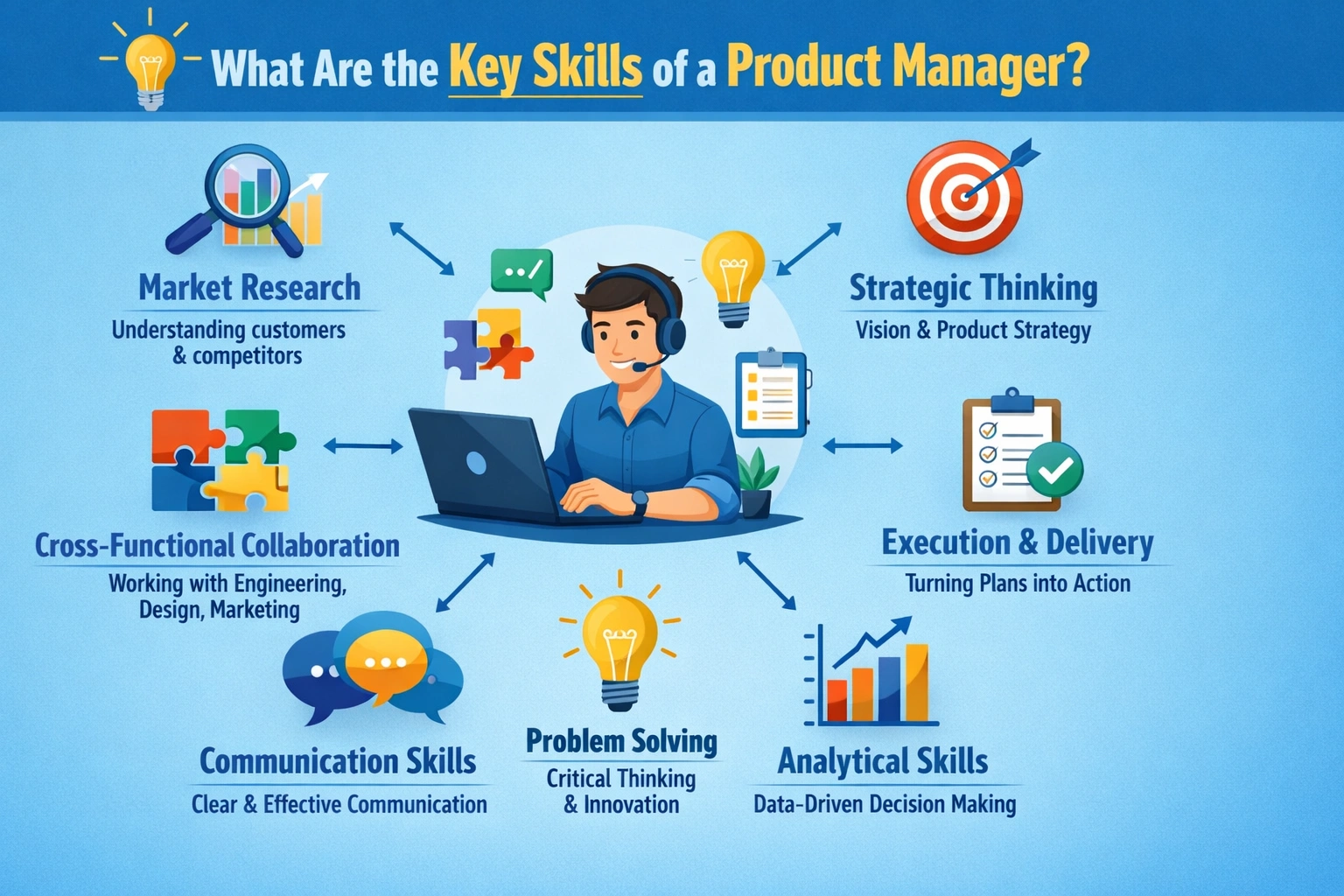
In today’s fast-paced and competitive business environment, the role of a Product Manager (PM) has become one of the most critical positions in any organization. A Product Manager acts as the bridge between business goals, customer needs, and technical execution. They are responsible for guiding a product from idea to launch and beyond. To succeed in this role, a Product Manager must develop a unique mix of strategic, technical, and interpersonal skills. Below are the key skills every successful Product Manager should master.
1. Strategic Thinking and Vision
A Product Manager must have a clear vision of where the product is headed. Strategic thinking helps PMs define long-term goals, align the product roadmap with business objectives, and prioritize features that deliver maximum value. This skill allows them to look beyond short-term tasks and focus on how the product fits into the overall market and company strategy.
2. Customer-Centric Mindset
Understanding customer needs is at the heart of product management. A strong Product Manager constantly gathers feedback through user research, surveys, interviews, and data analysis. By empathizing with users and identifying pain points, PMs can build products that truly solve real-world problems. A customer-first approach ensures higher adoption, satisfaction, and retention.
3. Communication and Collaboration
Product Managers work with cross-functional teams including engineering, design, marketing, sales, and leadership. Clear and effective communication is essential to align everyone around a shared goal. PMs must explain complex ideas in simple terms, document requirements clearly, and facilitate productive discussions. Strong collaboration skills help teams work efficiently and avoid misunderstandings.
4. Decision-Making and Prioritization
One of the biggest challenges in product management is deciding what to build and what not to build. PMs are constantly faced with limited time, resources, and budget. The ability to prioritize features based on impact, effort, and strategic value is crucial. Good decision-making ensures that the team focuses on high-value tasks rather than distractions.
5. Analytical and Data-Driven Skills
Modern product management relies heavily on data. Product Managers must analyze metrics such as user engagement, conversion rates, retention, and revenue. Data-driven thinking helps PMs validate assumptions, measure success, and make informed decisions. By interpreting data correctly, they can continuously improve the product and demonstrate its value to stakeholders.
6. Technical Understanding
While a Product Manager does not need to be a developer, having a basic understanding of technology is very important. Technical knowledge helps PMs communicate effectively with engineers, understand system limitations, and make realistic plans. This skill enables better estimation, problem-solving, and smoother product development cycles.
7. Leadership and Ownership
A Product Manager often leads without formal authority. Leadership skills help PMs inspire teams, resolve conflicts, and keep everyone motivated. Taking ownership of the product means being accountable for successes and failures. Strong leadership builds trust and encourages teams to work towards a common vision.
8. Problem-Solving Ability
Product Managers face challenges at every stage of the product lifecycle. Whether it is changing customer expectations, technical constraints, or market competition, PMs must be skilled problem-solvers. The ability to think creatively, evaluate alternatives, and implement effective solutions is essential for long-term success.
9. Time Management and Organization
With multiple responsibilities and stakeholders, Product Managers must manage their time efficiently. Strong organizational skills help PMs handle meetings, documentation, planning, and follow-ups without losing focus. Effective time management ensures timely delivery of features and keeps projects on track.
10. Adaptability and Continuous Learning
The product landscape is constantly evolving due to new technologies, changing customer behavior, and market trends. A successful Product Manager must be adaptable and open to learning. Staying updated with industry trends, tools, and best practices helps PMs remain competitive and relevant in their role.
Conclusion
The role of a Product Manager is both challenging and rewarding. It requires a balanced combination of strategic thinking, communication, technical understanding, and leadership. By developing these key skills, a Product Manager can successfully guide products that meet customer needs and drive business growth. As organizations continue to focus on innovation and user experience, skilled Product Managers will remain in high demand across industries.